
An ROV was used to inspect a submerged intake structure, giving the client clear video and imagery of key areas while reducing access complexity and avoiding a more disruptive inspection method.
OVERVIEW
A client required a visual inspection of an intake structure to assess its condition and identify any visible issues affecting performance, maintenance planning, or future remedial works. The asset was located in a submerged and difficult-to-access environment, making conventional inspection methods less practical and more operationally demanding.
To obtain clear visual evidence while reducing disruption, an ROV was deployed to carry out a remote inspection of the intake structure. The system captured video and still imagery of key submerged areas, allowing the client to assess visible condition without relying on a more intrusive conventional inspection approach.
THE CHALLENGE
The client needed to inspect a submerged intake structure in order to better understand asset condition, review visible deterioration or blockage risk, and support maintenance planning.
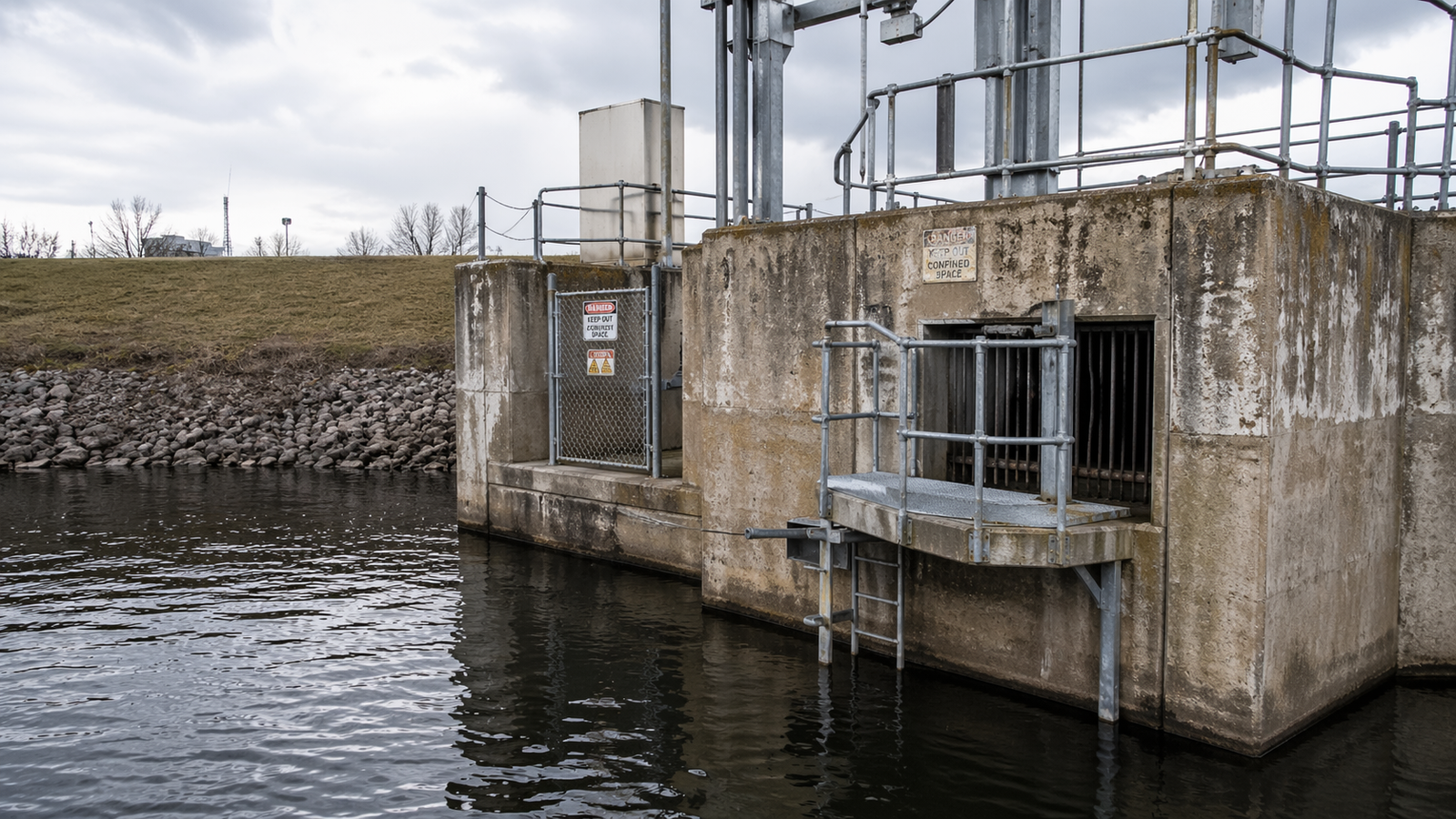
Intake structures can be difficult assets to inspect using traditional methods. They are commonly located below water level, may include restricted or partially enclosed inspection zones, and can be affected by limited visibility, debris, sediment, biological growth, or access constraints around the surrounding asset. In many cases, conventional inspection would involve a more complex setup, greater planning requirements, and a more disruptive operational approach.
For the client, the challenge was to obtain reliable visual evidence from a submerged structure without introducing unnecessary cost, access complexity, or interruption to ongoing operations.
WHY CONVENTIONAL METHODS WERE LESS SUITABLE
A conventional inspection approach can introduce several challenges when dealing with intake structures.
Safety considerations
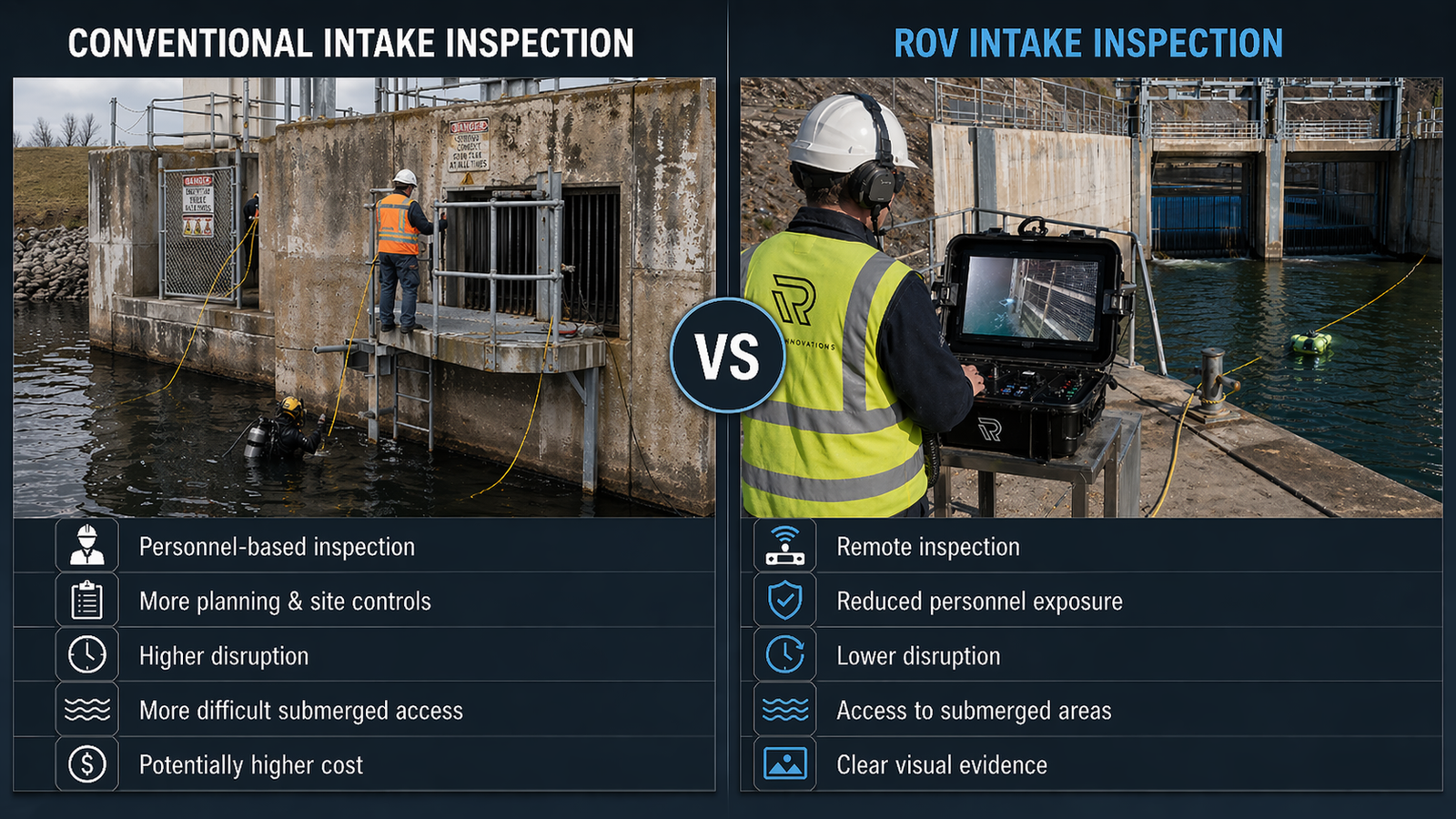
Submerged intake structures can create elevated safety risks where direct personnel-based inspection methods are considered. Depending on the asset and environment, the work may involve higher-risk access arrangements, specialist personnel, or additional control measures to carry out the inspection safely.
Access limitations
Physical access is often one of the main barriers to effective inspection. Intake structures may be partially enclosed, submerged, or located in positions where direct visual access is limited. Key components or inspection zones may also be difficult to reach using traditional methods, especially where water depth, visibility, or surrounding infrastructure restricts access.
Higher cost and operational disruption
Traditional inspection methods can also increase the total inspection burden. Depending on the site, a conventional approach may require more equipment, more personnel, more planning, and greater coordination with operations. Where the intake structure forms part of an active asset or process, the client may wish to avoid unnecessary disruption, intervention, or downtime.
For this project, the client required a lower-disruption solution that could still provide clear and reviewable inspection evidence from the submerged structure.
ROBOTIC INSPECTION APPROACH
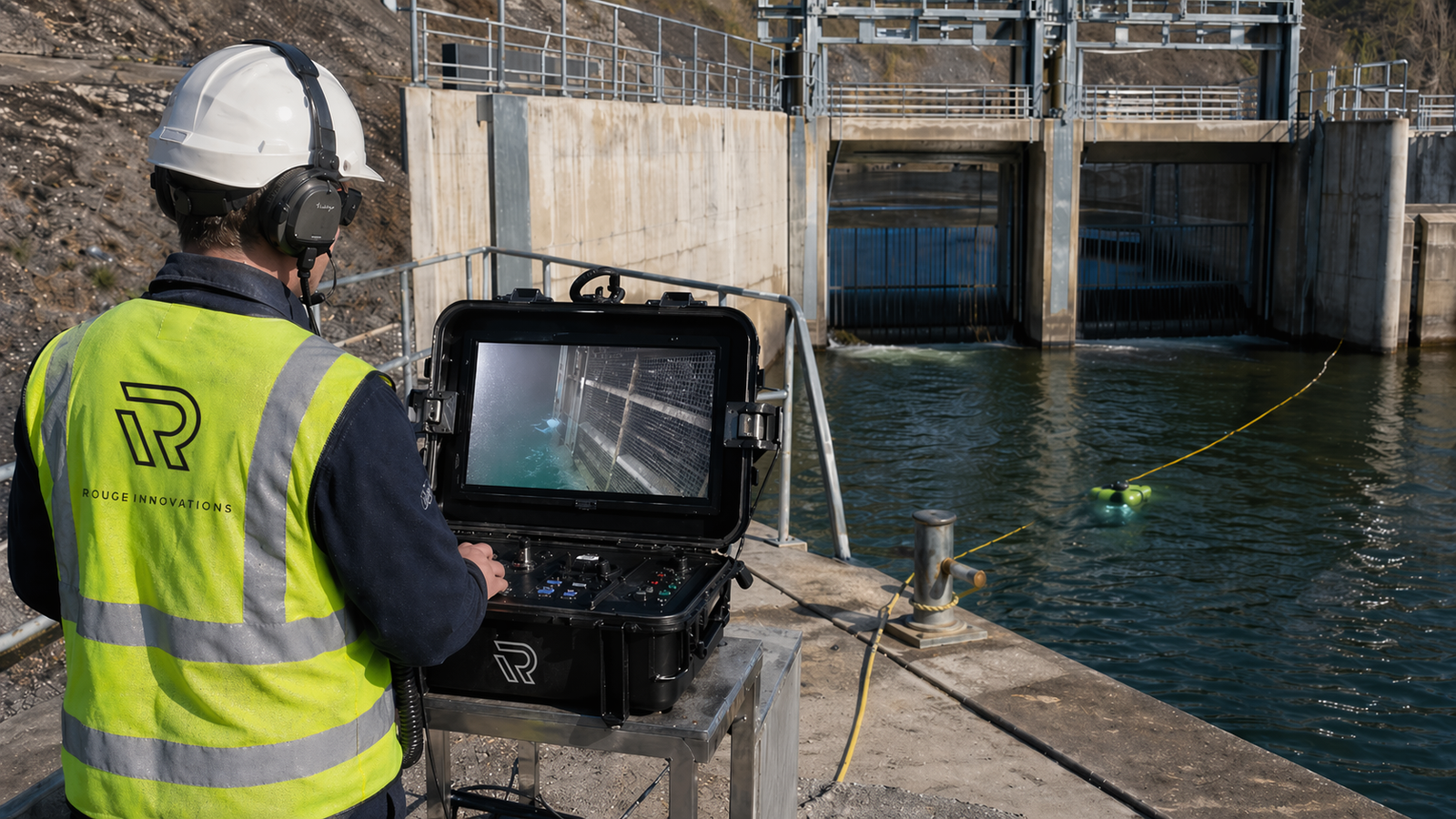
To address these challenges, an ROV was used to carry out a remote inspection of the intake structure.
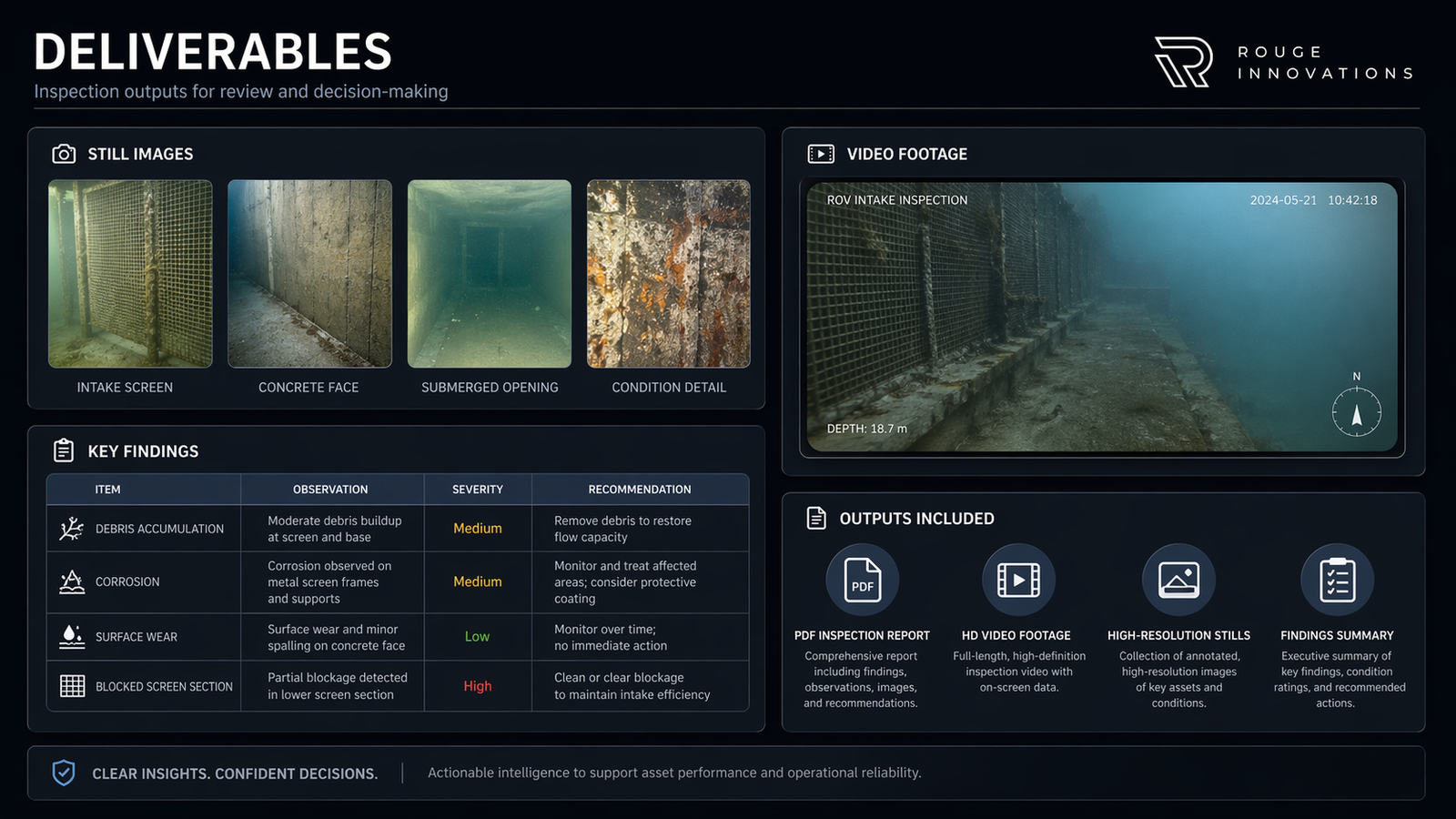
The ROV was deployed to inspect the submerged asset and capture high-quality video and still imagery of visible structural and operational features. This enabled the client to review the condition of the intake structure without relying on a more intrusive conventional inspection setup.
Using the ROV, the inspection focused on:
- Assessing visible condition of submerged structural elements,
- Reviewing areas affected by debris, sediment, or growth,
- Checking for signs of blockage, damage, or deterioration where visible,
- Capturing clear visual evidence for client review,
- Documenting observations to support reporting and maintenance planning.
This approach allowed the inspection to remain focused on the client’s main need: obtaining practical visual evidence from a difficult-to-access submerged asset in an efficient and controlled way.
INSPECTION SCOPE SUMMARY
- Remote visual inspection of the submerged intake structure
- Review of accessible structural and operational features
- Capture of inspection video and selected still imagery
- Observation of visible condition issues, debris, blockage, or deterioration
- Documentation of findings for review and reporting
- Preparation of a structured inspection summary and output package
INTERNAL CONDITION EVIDENCE
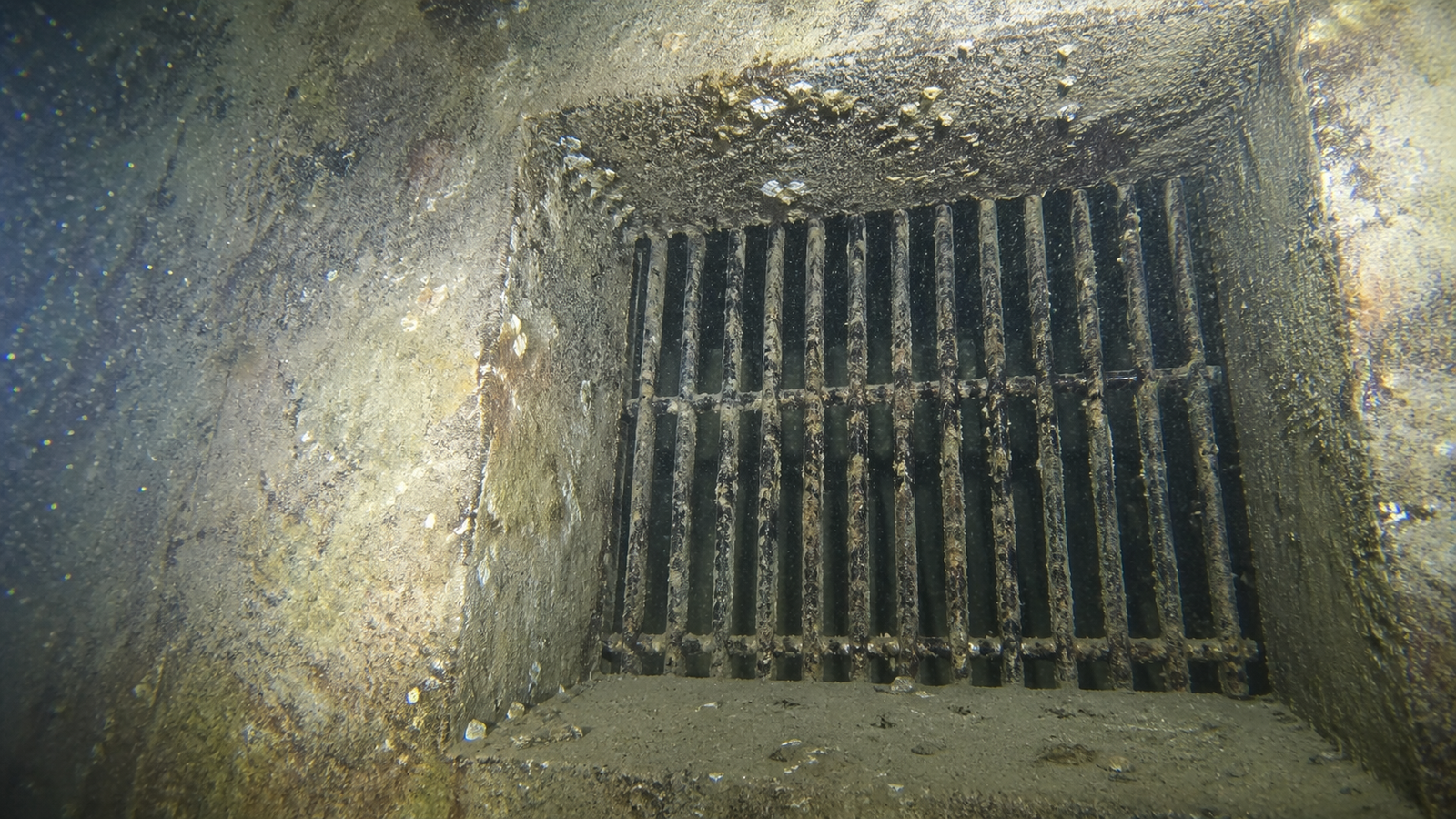
A key part of the inspection was the ability to obtain clear visual evidence from submerged sections of the intake structure that would otherwise be more difficult or more disruptive to inspect using conventional methods.
The ROV provided imagery of structural faces, submerged openings, surrounding conditions, and areas of visible interest. This gave the client a clearer understanding of asset condition and supported identification of any issues requiring further attention.
SAFETY & OPERATIONS BENEFITS
One of the main advantages of the ROV-based approach was the ability to inspect the intake structure while reducing reliance on more disruptive and access-heavy inspection methods.
By using robotic inspection, the client benefited from:
Reduced personnel exposure
The inspection reduced the need for personnel to access a submerged and potentially higher-risk inspection environment in order to gather visual evidence.
Improved access to submerged areas
The ROV was able to reach and inspect submerged sections of the intake structure more effectively than would typically be possible through a conventional visual inspection approach.
Lower operational disruption
The inspection could be completed with less interruption to the surrounding asset or process than might be expected from a more traditional inspection method.
Efficient delivery of usable outputs
The client received clear footage, still imagery, and reporting outputs that could be reviewed and used to support maintenance planning and next-step decisions.
Outcome
The inspection provided the client with a clear visual record of intake structure conditions, supported by video, still imagery, and structured reporting. This gave the client a practical basis for assessing visible condition, identifying any areas of concern, and planning any further maintenance, cleaning, monitoring, or follow-up inspection activity that may be required.
By using an ROV, the client was able to inspect a difficult-to-access submerged intake structure in a way that reduced access complexity, limited disruption, and avoided the need for a more operationally demanding conventional inspection approach.
Key Benefits Delivered
- Remote inspection of a submerged intake structure
- Reduced need for more intrusive conventional inspection methods
- Improved access to difficult-to-reach submerged areas
- Lower operational disruption during inspection
- High-quality video and still imagery for review
- Clear reporting to support maintenance and asset management decisions